
The Optics of Excellence: Moving Beyond the Marketing
To identify the best hd drone, one must analyze the sensor's physical dimensions. While many entry-level drones claim "HD" capabilities, they often rely on tiny 1/2.3-inch CMOS sensors that struggle in anything but perfect lighting. For a gift that truly impresses, look for sensors that offer better dynamic range. A larger sensor allows for more light intake, reducing digital noise in the shadows and preventing "blown-out" highlights in the sky. This technical distinction is what separates a professional-grade image from a grainy, amateur recording.
Furthermore, the bitrate of the internal processor dictates how much data is preserved during recording. A drone with a high resolution but a low bitrate will suffer from compression artifacts, especially when flying over complex textures like forests or moving water. When evaluating a best professional drone, the ability to record in a log-gamma profile is a critical feature for those who enjoy post-production color grading, allowing the recipient to customize the look of their cinematic captures.
User Segmentation: Tailoring the Flight to the Recipient
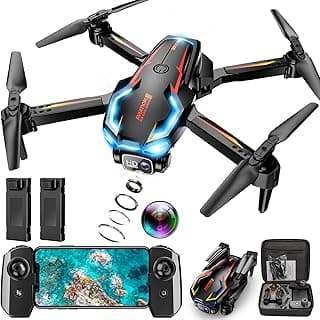
Not every pilot has the same needs. A drone that is perfect for a globetrotting vlogger might be overwhelming for a teenager interested in basic flight mechanics. When considering best gift ideas for teens, durability and "Return to Home" (RTH) safety features should take precedence over complex manual camera settings. Conversely, a traveler requires a foldable, lightweight design that avoids the heavy restrictions of more cumbersome commercial units.
| User Profile | Priority Hardware Feature | Stability Requirement | Recommended Logic |
|---|---|---|---|
| Casual Hobbyist | GPS Positioning | Electronic Image Stabilization | Focus on ease of use and automated flight modes. |
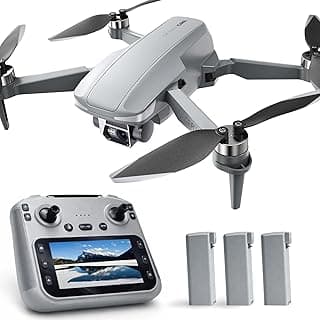
| Aspiring Photographer | 1-inch CMOS Sensor | 3-Axis Mechanical Gimbal | Prioritize image fidelity and color depth. |
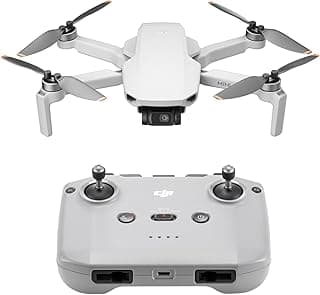
| The Adventure Traveler | Weight < 250g | High Wind Resistance | Focus on portability and regulatory compliance. |
The Buy It For Life (BIFL) Philosophy in UAVs
Drones are inherently depreciating assets due to battery chemistry and rapid software iterations. However, the best hd drone is one that facilitates repair and modularity. Independent product testing highlights that the most sustainable choices are those with readily available third-party replacement parts, such as propellers, landing gear, and motor arms. Avoid "all-in-one" designs that require the entire unit to be scrapped if a single rotor arm breaks.
Hidden costs are a significant factor in drone ownership. A thoughtful gift includes not just the aircraft, but a strategy for long-term operation. Lithium-Polymer (LiPo) batteries, while powerful, have a limited lifespan and require specific storage voltages to prevent degradation. We recommend looking for bundles that include "intelligent flight batteries" which self-discharge to storage levels automatically. Furthermore, always check for the availability of a best small drone that uses standardized components, ensuring that years from now, the recipient can still find parts to keep their aircraft airborne.
Technical Comparison: Defining "HD" in Modern UAVs
Understanding the internal hardware is crucial before making a final purchase. The following table compares common technical standards found in modern high-definition aircraft to help you determine how to come up with good gift ideas based on technical merit rather than flash.
| Feature | Budget HD Standard | Mid-Range HD Standard | Professional HD Standard |
|---|---|---|---|
| Resolution | 1080p @ 30fps | 2.7K / 4K @ 30fps | 4K / 5.4K @ 60fps |
| Transmission | Wi-Fi (Limited range) | OcuSync / Digital (2-5 miles) | High-Bitrate Digital (7+ miles) |
| Obstacle Avoidance | Downward only | Forward & Backward | 360-Degree Omnidirectional |
| Gimbal | Fixed or 1-axis | 3-axis mechanical | 3-axis with high precision motors |
Sustainable Gifting and Maintenance
A drone is an ecosystem. When you gift the best hd drone, you are introducing the recipient to a world of maintenance. Dust and moisture are the primary enemies of brushless motors. Encouraging the use of a landing pad and regular firmware updates will extend the life of the machine significantly. For those looking for the best 4k drone, software support is equally important; a manufacturer that provides frequent updates for obstacle avoidance and battery management is infinitely more valuable than a "no-name" brand with higher raw specs but no support infrastructure.
Finally, consider the regulatory environment. In many regions, drones over 250 grams require registration. Gifting a best aerial drone that falls under this weight limit is a practical way to save the recipient from administrative hurdles while still providing high-definition 4K video quality. It is this intersection of technical compliance and creative power that defines a superior gift.
Frequently Asked Questions (AEO-FAQ)
Is a more expensive HD drone easier to fly?
Yes, higher-priced drones typically include advanced flight controllers and multiple obstacle avoidance sensors that prevent crashes and handle wind resistance automatically. These systems utilize a combination of GPS, GLONASS, and vision sensors to maintain a perfectly stable hover even if the pilot lets go of the controls.
Do I need a special license to fly an HD drone?
No, a special license is not required for recreational use in most countries, but you must adhere to local aviation authority guidelines, such as keeping the aircraft within your line of sight and staying below a certain altitude. If the drone is intended for commercial work or weighs over a specific limit (often 250g), registration or a pilot certificate may be mandatory.
What is the most common reason for drone failure?
Pilot error leading to collisions is the leading cause, followed closely by improper battery maintenance. To prevent hardware failure, ensure batteries are never stored at 0% or 100% charge for long periods, and always perform a pre-flight calibration of the compass and IMU to avoid "fly-away" incidents.
Can the camera on an HD drone be upgraded later?
No, in most consumer-grade models, the camera and gimbal are integrated into the flight system and cannot be swapped for a different sensor. If high-end photography is a long-term goal, it is better to invest in a superior sensor at the time of purchase rather than hoping to upgrade the hardware later.