

Understanding the Physics of Underwater Exploration
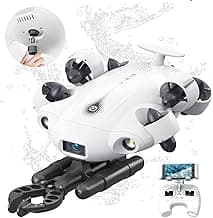
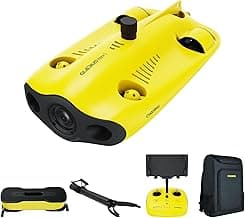
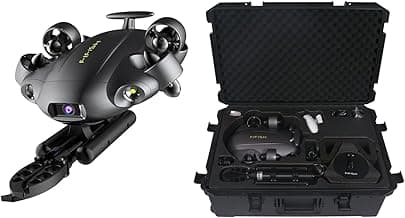
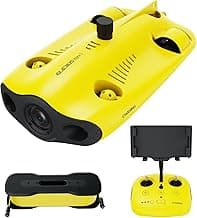
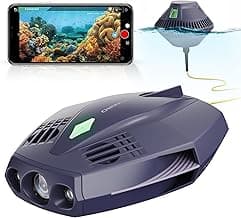
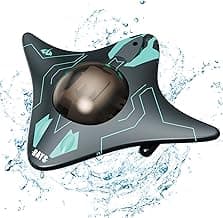
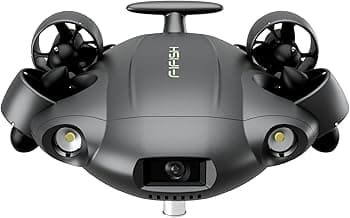
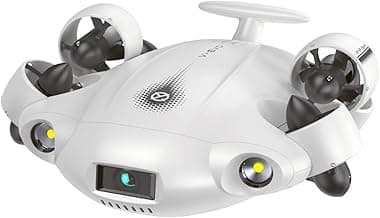
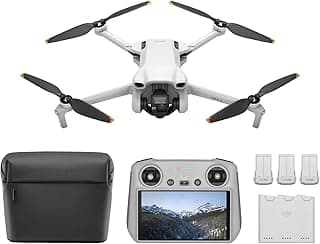
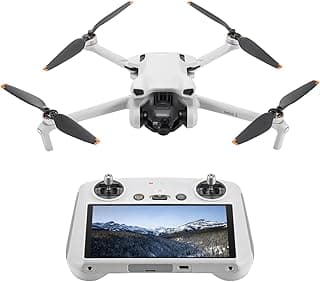
Unlike an aerial best 4k drone, which relies on air displacement for lift, an underwater drone must navigate a medium roughly 800 times denser than air. This physical reality dictates every aspect of the machine's design, from the torque requirements of the thrusters to the structural integrity of the chassis. A high-quality ROV is not merely a waterproof camera; it is a pressure-sealed vessel designed to maintain neutral buoyancy while fighting currents and managing the drag of a communication tether.
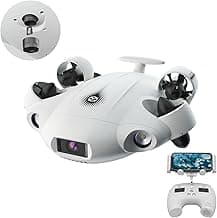
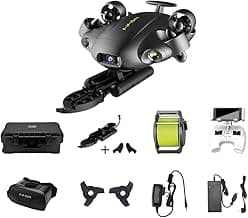
The transition from hobbyist toys to serious exploration tools hinges on the "Degrees of Freedom" (DoF). Entry-level models typically offer 3 DoF (forward/back, up/down, and yaw), whereas advanced units feature 5 or 6 DoF, allowing for lateral movement (strafing) and pitch control. This maneuverability is critical for inspecting boat hulls, reefs, or submerged structures where a stable hover is necessary for clarity. What is a good experiential gift? Often, it is one that provides a completely new capability, and the ability to explore depths up to 100 meters without getting wet certainly qualifies.
Gifting tech is about more than specifications; it is about upgrading the recipient's window to the digital world, ensuring every frame is a testament to quality.
Technical Comparison: Recreational vs. Prosumer ROVs
To assist in the selection process, the following data highlights the technical variables that separate basic consumer models from professional-grade equipment. These metrics are vital for anyone considering these as best gift ideas for him or as a high-tech tool for a marine enthusiast.
| Technical Variable | Recreational Standard | Prosumer/Commercial Grade |
|---|---|---|
| Maximum Depth Rating | 15 – 30 Meters | 100 – 150+ Meters |
| Thruster Configuration | 3-Thruster (Basic) | 6 to 8 Thrusters (Omnidirectional) |
| Image Sensor Type | 1/2.3" CMOS | 1" CMOS or Larger (Low Light Optimized) |
| Communication Link | Short Wireless / Thin Tether | Reinforced Neutrally Buoyant Tether |
| Operational Duration | 45 – 90 Minutes | 2 – 4 Hours (Swappable Battery) |
The Tether Debate: Why Wireless is a Misnomer
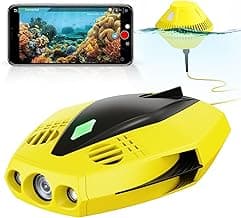
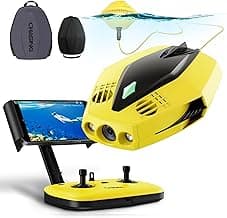
A common misconception among those looking for the best underwater drone is that wireless is always better. In physics, radio frequency (RF) signals attenuate almost instantly in water. While some "wireless" drones exist, they typically rely on a floating buoy that communicates via Wi-Fi to a device on the surface, while a physical cable still connects the buoy to the drone. For any serious exploration, a direct tether is mandatory. It ensures a zero-latency video feed and prevents the loss of an expensive unit should the battery fail or a motor stall.
The Gifting Strategy: Identifying the Recipient’s Needs
When selecting these devices as best gift ideas for teens interested in STEM or for a seasoned boat owner, one must consider the specific environment of use. What is someone that loves technology? They are individuals who value the intersection of hardware reliability and software sophistication. For a recipient who already uses a best sport tracking watch to monitor their physical excursions, an underwater ROV represents the next step in data-driven exploration.
The Coastal Hobbyist and Boat Owner
For those who spend significant time on the water, a drone is a practical maintenance tool. It allows for the inspection of zinc anodes, propellers, and hull integrity without the logistical burden of a dive team. In this scenario, priority should be placed on a "bottom lock" feature—the ability of the drone to maintain a consistent distance from the sea floor regardless of surge or current.
The Budding Marine Biologist
Younger users or students require a different balance. For them, a best 100 dollar drone in the aerial category might be a starting point, but the underwater equivalent requires a higher investment to ensure safety and functionality. Educational gifting should focus on models with integrated lighting (measured in Lumens) and easy-to-use mobile apps that facilitate the logging of biological sightings.
Durability and the "Buy It For Life" Philosophy
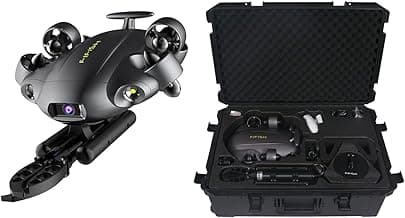
The greatest enemy of the best underwater drone is not pressure, but corrosion. Saltwater is an aggressive electrolyte that will compromise any exposed metal or poorly sealed gasket. To ensure a "Buy It For Life" (BIFL) experience, the ROV must be constructed with modular parts. Before purchasing, verify the availability of replacement thrusters and O-ring kits. A machine that cannot be serviced by the user is essentially a disposable product after its first significant seal failure.
Hidden costs often include specialized cleaning agents to remove salt deposits and the eventual degradation of the internal lithium batteries. Professional testers recommend models with swappable battery compartments, as internal batteries that are non-removable will eventually limit the lifespan of the entire unit once their cycle count exceeds 300-500 charges.
Frequently Asked Questions
Do underwater drones work in saltwater?
Yes, most high-quality underwater drones are designed for saltwater, but they require a strict maintenance protocol involving a thorough freshwater rinse of all thrusters and seals after every immersion to prevent crystallization and corrosion.
Can an underwater drone be used for fishing?
Yes, many models now include specialized bait-drop attachments or sonar modules to serve as mobile fish-finders, though users should check local maritime regulations regarding the use of electronic aids in fishing.
What happens if the tether gets snagged?
Most professional ROVs are designed with neutrally buoyant tethers to minimize snagging, but if it occurs, many units have a "return to home" or "vertical surface" failsafe, though manual recovery via a diver may be necessary in extreme entanglement scenarios.
Is 4K resolution necessary for an underwater drone?
No, while 4K is beneficial for professional cinematography, the visibility limitations in many water bodies mean that 1080p with high-quality LED illumination and a large image sensor often provides a more usable image in murky or low-light conditions.
Ultimately, choosing the best underwater drone involves looking beyond the marketing jargon and focusing on the mechanical realities of the marine environment. Whether it is a gift intended to inspire a future scientist or a tool for a nautical veteran, the value lies in the reliable performance of its seals, the stability of its software, and the durability of its construction.