

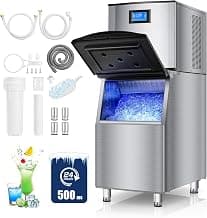
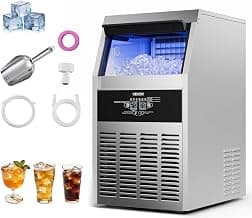
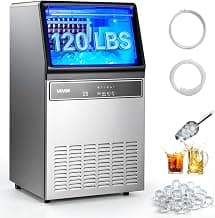
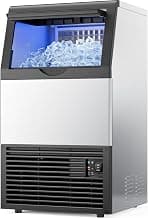
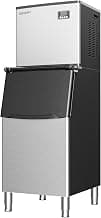
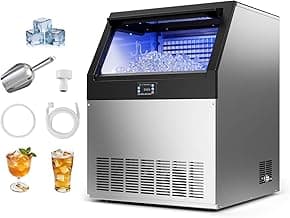
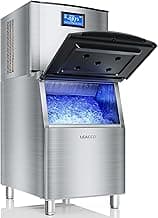
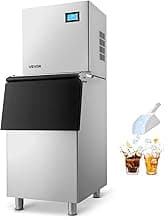
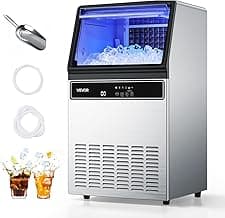
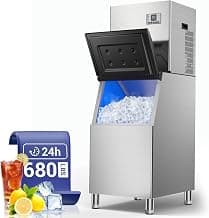
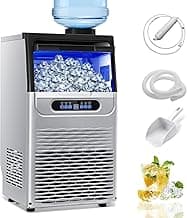
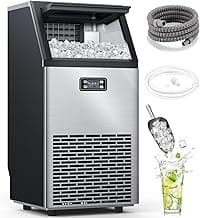
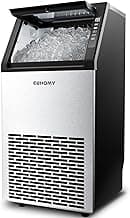
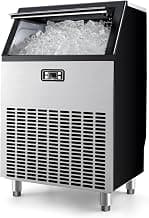
Technical Variables: Analyzing the Best Commercial Ice Maker Machine
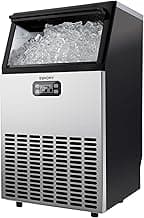
The selection of a professional ice machine should be dictated by the specific needs of the user persona. We have categorized the primary technical considerations in the table below to facilitate a data-driven gifting decision. Note that "Production Capacity" refers to the amount of ice generated in a 24-hour period under optimal ambient temperatures (usually 70°F air/50°F water).
| User Category | Recommended Ice Type | Daily Production Needs | Key Technical Requirement |
|---|---|---|---|
| Home Bar Enthusiast | Gourmet / Clear Cube | 50 - 100 lbs | Low decibel operation & small footprint |
| Large Family / Healthcare | Nugget / Chewable | 80 - 150 lbs | High surface area for rapid cooling |
| Small Business / Café | Half-Dice / Crescent | 200+ lbs | Air-cooled condenser with easy-access filters |
For individuals with specific texture preferences—such as those who enjoy "crunchable" ice—the best chewable ice maker technology is a marvel of mechanical engineering. These units use an auger to scrape ice flakes off a refrigerated cylinder and then compress them into small, porous cylinders. This type of ice is highly coveted in best gift ideas for a woman who appreciates specialized kitchen tech or for families with children, as it absorbs the flavor of the drink and is safer for dental health than hard, clear cubes.
The Buy It For Life (BIFL) Perspective: Durability and Maintenance
As an analyst of mechanical longevity, I must warn against the "hidden costs" of ownership that accompany low-tier "commercial-style" machines. A true best commercial ice maker machine should feature a modular design. This means the water pump, the float switch, and the condenser fan should be independently replaceable. Machines that use integrated, non-serviceable sealed systems are essentially disposable once a single component fails. When selecting a what is a nice client gift in the corporate world, ensuring the product has a robust service network is paramount.
Maintenance is the primary enemy of ice machine longevity. Mineral scaling from hard water can insulate the evaporator, forcing the compressor to run longer and hotter, eventually leading to premature failure. Therefore, any gift of a commercial ice maker should be accompanied by a high-quality inline water filtration system. This not only improves the taste of the ice but protects the internal components from calcium and magnesium buildup. Furthermore, for those living in tight quarters, a best countertop nugget ice maker offers a compromise between professional output and residential space constraints, provided it features a self-cleaning cycle to mitigate mold growth in the reservoir.
Addressing Diverse User Needs and Living Conditions
The "one size fits all" approach fails when gifting high-end appliances. An elderly recipient or someone with limited mobility requires a machine with an ergonomically designed bin door that stays open during use and a scoop that is easy to grip. Conversely, for a tech-savvy homeowner, the best clear ice maker for home bar might include Wi-Fi connectivity to monitor ice levels or schedule production during off-peak electricity hours.
Environmental factors also play a critical role. If the machine will be installed in a garage or an outdoor kitchen, it must be "outdoor rated" with enhanced insulation and a stainless steel wrap capable of resisting corrosion. Air-cooled units are the standard for most gifts, but they require several inches of clearance for airflow. In contrast, water-cooled units are quieter and can be built into tight cabinetry, but they consume significantly more water, which may be a concern in drought-prone regions or areas with high utility costs.
Frequently Asked Questions (FAQ)
Does a commercial ice maker require a floor drain?
Yes, nearly all professional-grade units utilize a gravity drain to remove excess water from the melting ice in the bin. If a floor drain is not available at the gift recipient's location, you must ensure the unit is equipped with a built-in drain pump to move water to a nearby sink or standpipe.
What is the difference between "Commercial" and "Residential" ice?
The primary difference lies in the density and purity of the ice. Commercial machines typically produce "hard ice" with a lower air content, which melts much slower than the cloudy, soft ice produced by standard refrigerator ice makers. This is why a professional-grade unit is often considered the best bar ice maker for enthusiasts.
How often does a commercial ice maker need cleaning?
At a minimum, these machines require a deep descaling and sanitization every six months. In environments with hard water or high airborne yeast (like bakeries or home kitchens), cleaning may be required every three months to prevent "slime" buildup and ensure the ice remains safe for consumption.
Can I use a commercial ice maker without a water filter?
No, using a commercial unit without a dedicated water filter is not recommended. Doing so will void many manufacturer warranties and significantly shorten the lifespan of the evaporator plate due to mineral pitting and scale accumulation.
In conclusion, choosing the best commercial ice maker machine as a gift is an act of foresight. It is a gift that recognizes the recipient's love for hospitality and provides them with a tool built to professional standards. By focusing on repairability, ice quality, and specific environmental requirements, you ensure that this generous investment provides value for decades, rather than just a few seasons.