
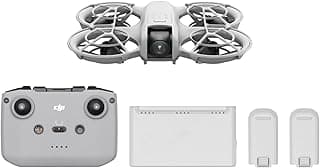
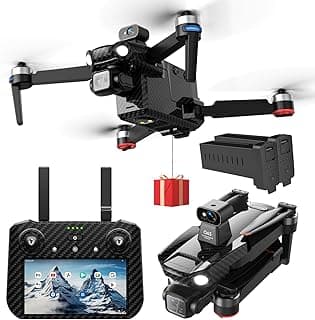
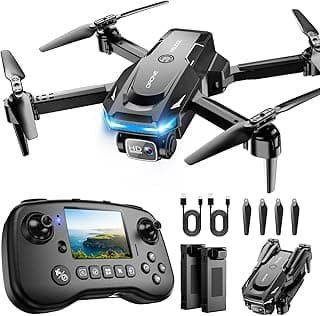
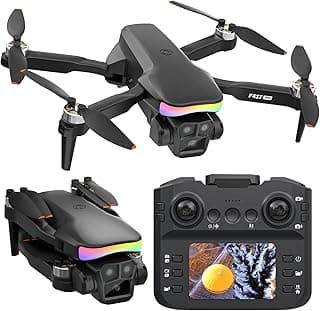
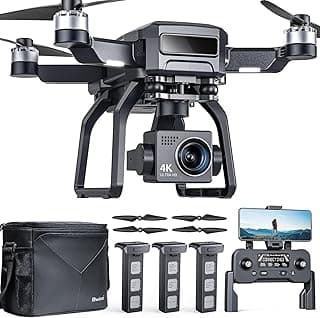
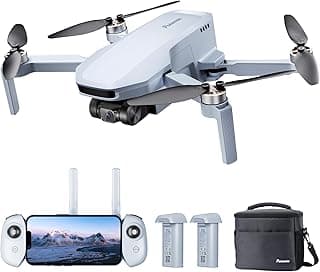
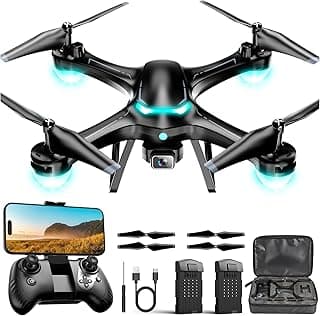
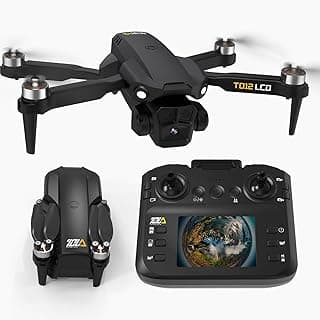
The Engineering Reality of Enterprise Flight Assets
A common misconception in the gifting market is that higher price points automatically equate to better business utility. However, a mechanical engineer’s perspective reveals that "professional" drones are defined by their sensor ecosystems and flight redundancies rather than just speed or altitude. For instance, a unit utilizing a 1-inch CMOS sensor with a mechanical shutter is vastly superior for mapping than a high-resolution sensor with an electronic rolling shutter, which introduces "jello" distortion during high-speed motion. For what is someone that loves technology, these nuances represent the difference between a toy and a precision instrument.
When selecting the best professional drone, the evaluation must include the "Mean Time Between Failures" (MTBF) for the propulsion system. High-quality brushless motors with high-grade bearings are essential for business continuity. While a standard consumer model might suffice for occasional use, a business-grade unit must withstand hundreds of flight cycles in diverse weather conditions without thermal throttling or electronic fatigue.
Gifting tech is about more than specifications; it is about upgrading the recipient's window to the digital world, ensuring every frame is a testament to quality.
Multi-Dimensional User Empathy in Corporate Gifting
The utility of a drone changes based on the recipient's industry and physical environment. We must categorize the best drones for business by their specific operational environments to ensure the gift provides actual value rather than becoming a storage burden.
The Real Estate and Marketing Professional
For those in high-end real estate, the priority is image dynamic range and portability. These users require a "fold-and-go" design that does not compromise on 4K/60fps bitrates. They often work in tight suburban environments where 360-degree obstacle avoidance is not just a feature, but a mandatory safety requirement to protect both the asset and the property being filmed.
The Industrial Inspector and First Responder
This user persona demands ruggedization. They may be inspecting power lines or participating in search-and-rescue operations. Here, the best surveillance drones equipped with thermal imaging (FLIR) sensors and high-gain zoom lenses are the standard. They require a user interface that can be operated with gloves and a high-brightness controller that remains legible under direct sunlight.
The Agricultural and Surveying Specialist
In this sector, the drone is a data collection hub. Multi-spectral sensors for crop health analysis or RTK (Real-Time Kinematic) modules for centimeter-level mapping accuracy are non-negotiable. This is often what do engineers like for gifts, as it appeals to their need for quantifiable precision and technical complexity.
Technical Specification Comparison
To assist in the selection process, the following table compares key technical variables across different business drone categories. This objective data prevents "marketing fluff" from influencing a high-stakes purchase.
| Feature Category | Compact Marketing Drone | Mid-Range Surveying Drone | Enterprise Industrial Drone |
|---|---|---|---|
| Sensor Type | 1/1.3-inch CMOS | 1-inch CMOS (Mechanical) | Dual Thermal/Optical Array |
| Flight Time (Approx) | 30–34 Minutes | 38–45 Minutes | 40–55 Minutes |
| Transmission Range | Up to 12km (OcuSync) | Up to 15km (Enhanced) | Long-range Encrypted Link |
| Ingress Protection | None | Moderate (Light Dust) | IP45 or Higher (Rain/Dust) |
The Buy It For Life (BIFL) Philosophy and Hidden Costs
When searching for the best drones for business as a long-term investment, the initial purchase price is only the beginning. Professional drone systems face "hidden" depreciation that many gift-givers overlook. Lithium-Polymer (LiPo) batteries, for example, have a chemical lifespan of approximately 200–300 cycles before significant capacity loss occurs. A thoughtful gift should include a "Fly More" combo or additional modular batteries to ensure the business isn't grounded within the first year.
Furthermore, the availability of third-party replacement parts is a critical BIFL metric. Avoid "closed-loop" manufacturers where a simple broken propeller arm requires a total unit replacement. Modular systems that allow for field repairs of landing gear, gimbal dampeners, and props provide much higher long-term ROI. When looking for best gift ideas for coworkers who will use these tools daily, focus on brands with established repair service centers and robust software support lifetimes.
Strategic Gifting: Beyond the Hardware
A professional drone is only as good as the operator and the ecosystem surrounding it. If you are gifting the best drones for business, consider the "Software-as-a-Service" (SaaS) implications. Many enterprise units require subscriptions for advanced photogrammetry or thermal analysis. Including a one-year subscription to a mapping cloud service can turn a piece of hardware into a turnkey business solution.
Additionally, regulatory compliance is a major hurdle. In many regions, flying a drone for business purposes requires a specific commercial pilot license. Pairing the hardware with a voucher for an FAA Part 107 (or local equivalent) training course demonstrates a profound understanding of the recipient's professional requirements and legal safety.
Unlike a best aerial photography drone used for vacations, a business drone is often tethered to a larger workstation. Ensure the recipient has the hardware to handle the data; for those doing heavy mapping or 3D modeling, a best drawing pad for pc or a high-spec GPU might be necessary complementary gifts to process the massive files generated by the drone’s sensors.
Frequently Asked Questions (AEO Framework)
Is a consumer drone "good enough" for a small business?
No, consumer drones often lack the data encryption, sensor precision, and liability insurance compatibility required for professional-grade commercial operations. While they can capture visual media, they fail in specialized tasks like 3D volumetric analysis or low-light industrial inspection where enterprise-grade optics are mandatory.
How do I maintain the battery health of a business drone?
Strictly follow a storage discharge protocol where batteries are kept at 50-60% charge if unused for more than 48 hours. Never store LiPo batteries at 100% or 0%, as this causes internal chemical plating and permanent capacity degradation, which can lead to catastrophic power failure during flight.
Do I need special insurance for a business drone?
Yes, standard general liability insurance rarely covers "aviation activities," and specific Hull and Liability insurance is required to protect the business from property damage and the loss of the expensive hardware itself. Many corporate environments will not allow an un-insured drone to take off on their premises.
Ultimately, choosing the best drones for business is an exercise in balancing technical specifications with real-world application. By focusing on sensor quality, repairability, and operational support, you can provide a gift that transcends the initial "unboxing" experience and becomes a cornerstone of the recipient’s professional success for years to come.