


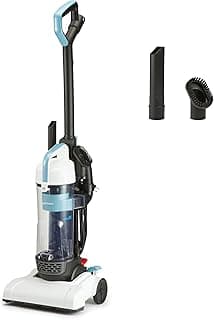
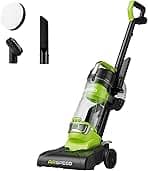
What "Budget" Actually Means in Vacuum Context
Budget vacuum territory occupies $50-150 range—below this lives purely disposable equipment failing within weeks, above this enters mid-range delivering measurably better performance justifying modest premium. This $100 sweet spot represents real engineering attempting solving genuine cleaning problems within severe cost constraints versus just slapping motor into plastic hoping it sells before failing.
However, budget engineering requires compromise—lighter materials reducing durability, smaller motors limiting suction, basic filtration allowing dust recirculation, and minimal attachments restricting versatility. The question isn't whether compromises exist but whether specific compromises matter for your actual use case. Someone vacuuming 300 square feet weekly tolerates limitations destroying satisfaction for someone managing 2,000 square feet daily with pets and kids.
The what is the best cheap vacuum cleaner depends entirely on matching limitations to your tolerance—not finding mythical budget vacuum performing like premium equipment but identifying which compromises you can accept versus which prove dealbreakers for your specific situation.
Who Budget Vacuums Actually Serve
First apartment dwellers: Young adults establishing independent households needing functional equipment without major investment. Budget vacuums provide adequate capability while preserving funds for other essential household items competing for limited resources. The vacuum requirement exists but doesn't justify premium spending when basic function suffices. When considering practical gifts for young men or thoughtful presents for women starting independent lives, matching capability to actual need demonstrates better judgment than overspending on unused features.
Temporary housing situations: Those in rentals, military families facing frequent moves, or anyone whose housing stability doesn't justify investment in permanent equipment. Budget vacuums prove disposable in best sense—serving immediate need without creating attachment or obligation when circumstances change requiring equipment abandonment.
Secondary cleaning tools: Homeowners with quality primary vacuums wanting quick-access tool for daily maintenance between deep cleaning sessions. Budget stick vacuums stored accessibly enable impulse cleaning that full-size equipment retrieval prevents—frequency trumping power when maintaining baseline cleanliness matters more than deep extraction.
Specific single-purpose needs: Someone requiring only car interior cleaning, small workshop dust control, or other specialized limited applications where general-purpose capability proves unnecessary. Budget equipment matching narrow use case serves better than premium general-purpose tools whose unused capabilities waste money.
The Compromise Matrix: What You're Trading
Suction power in budget vacuums runs 30-50% below premium equivalents—adequate for hard floors and low-pile carpet but struggling with thick pile or embedded debris. This limitation matters dramatically for carpet-dominant homes while proving irrelevant for hard floor apartments where suction requirements remain modest.
Build quality uses lighter plastics and simpler mechanisms—serviceable for careful occasional use but failing under daily intensive application. Budget vacuums assume residential use patterns, not commercial intensity. Someone vacuuming 10 minutes weekly achieves years of service from equipment failing within months under daily hour-long sessions.
Filtration proves basic—capturing visible debris but allowing fine dust recirculation. For allergy sufferers requiring air quality control, this proves unacceptable regardless of cost savings. For healthy individuals in well-ventilated spaces, adequate filtration suffices without premium HEPA justification. When air quality specifically matters, reference advanced filtration options addressing respiratory health.
Attachment variety stays minimal—often just crevice tool and dusting brush versus premium sets including specialized tools for every surface and situation. This matters when cleaning complexity demands versatility but proves irrelevant when 90% of vacuuming involves straightforward floor coverage.
The Form Factor Decision
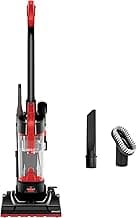
Budget uprights ($60-120) deliver best carpet performance in category—direct motor-to-brush connection maximizing power transfer despite overall capability limitations. For carpet-dominant spaces under 1,000 square feet, budget uprights provide adequate deep cleaning at minimal investment. However, they're heavy, bulky, and single-purpose—serving one need well rather than multiple needs adequately.
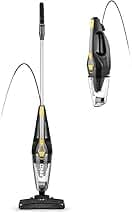
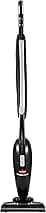
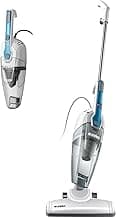
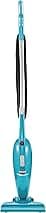
Budget stick vacuums ($50-100) offer versatility and storage convenience—wall mounting, easy handling, quick deployment for spontaneous cleaning. However, carpet performance suffers from battery and motor limitations. These prove ideal for hard floor-dominant small spaces prioritizing convenience over power. Cordless freedom enables maintenance frequency that compensates for individual session limitations.
Budget canisters ($80-150) balance capabilities—better suction than budget sticks, more versatility than budget uprights, though larger and more cumbersome than either. These suit varied flooring where neither upright carpet focus nor stick convenience clearly predominates. For mixed surface homes, explore comprehensive multi-surface solutions when budget allows.
The best budget vacuum isn't cheapest—it's whatever delivers adequate results for your actual space without wasting money on capability you'll never use.
What Budget CAN'T Deliver
Longevity proves budget vacuum's biggest limitation—2-3 year lifespan typical versus 7-10 years for quality equipment. This shorter life creates higher long-term costs when replacement frequency gets calculated. Someone replacing $100 vacuum every 2 years spends more over decade than buying $300 vacuum lasting 8+ years. Budget makes sense for temporary situations, not permanent solutions where amortized cost favors quality.
Pet hair handling requires power and engineering budget equipment lacks. The fur volume multiple pets generate, combined with hair's tendency wrapping brush rolls, demands capability budget designs can't provide. For pet households, compromising on vacuum capability creates daily frustration not worth savings. Reference pet-specific solutions when animals significantly impact cleaning needs.
Large homes exceed budget vacuum capacity through both area coverage and dirt volume. Small motors and dust bins designed for apartments struggle completing 2,000+ square foot cleaning in single session. Multiple emptyings, overheating motors, and extended cleaning times negate any cost benefit when inefficiency creates hours of extra annual labor.
Allergy management demands filtration quality budget vacuums economically can't provide. Sealed systems with genuine HEPA filtration require engineering investment cheap vacuums won't make. For respiratory health specifically, this proves non-negotiable regardless of budget constraints—cheap vacuum potentially worsening symptoms through dust recirculation creating medical costs exceeding equipment savings.
The Corded Advantage at Budget Level
Corded budget vacuums deliver significantly better performance than cordless equivalents—battery systems consuming substantial manufacturing budget that corded designs allocate entirely toward cleaning capability. A $100 corded vacuum outperforms $150 cordless simply through avoiding battery and charging infrastructure costs.
However, cordless convenience at budget pricing creates compelling proposition for small spaces—$80 cordless stick enabling daily quick cleaning versus $80 corded requiring setup effort preventing regular use. The power difference matters less when frequency compensates—five light cordless sessions maintaining cleanliness better than single intensive corded session followed by week of neglect.
For gift contexts, corded proves safer recommendation for recipients with larger spaces or unknown cleaning patterns—unlimited runtime and consistent power serving broader scenarios. Cordless works when recipient's situation clearly favors convenience and space constraints match battery limitations. When uncertain, corded eliminates runtime anxiety and battery degradation concerns.
Brand Reality in Budget Segment
Established brands' budget offerings trade on reputation while delivering similar performance as generic alternatives—you're paying brand premium without corresponding capability increase at this price point. That $120 name-brand budget vacuum performs comparably to $80 generic because both constrained by identical manufacturing cost realities creating performance ceiling brand recognition can't overcome.
However, established brands provide better customer service accessibility and replacement part availability—service infrastructure justifying modest premium when issues arise. Generic brands often prove unreachable for support, making equipment disposable when simple problems occur that established manufacturers would resolve through parts replacement or warranty service.
The calculation becomes: pay $40 extra for brand peace-of-mind or accept $80 generic as genuinely disposable with replacement plan if failure occurs. Neither approach proves wrong—preference depends on whether service access matters or equipment's considered temporary regardless of brand promises about longevity.
Reading Budget Vacuum Reviews Critically
Five-star budget vacuum reviews often come from users with low comparison basis—first vacuum purchase, upgrading from truly terrible equipment, or expectations so modest anything functional impresses. These enthusiastic reviews prove less useful than three-star reviews explaining specific limitations discovered through sustained use revealing whether compromises prove acceptable for your situation.
Durability complaints deserve particular attention in budget category—multiple reviews mentioning identical failure modes (motor burning out at 6 months, wheels breaking off, handle detaching) indicate predictable problems versus individual bad luck. Pattern recognition across reviews reveals whether equipment proves reliable budget option or false economy failing prematurely requiring replacement costs exceeding buying quality initially.
Use-case matching in reviews matters more than overall ratings—someone praising budget vacuum for studio apartment provides less relevant data than someone describing struggles in 1,500 square foot home. Filter reviews matching your actual space size and flooring type rather than accepting generic "works great" claims lacking context about conditions creating satisfaction or disappointment.
When to Gift Budget Vacuum Specifically
Budget vacuums prove appropriate gifts for life transitions involving temporary situations—college students, first apartments, short-term housing—where recipient needs functional equipment without obligation toward expensive item they'd feel guilty upgrading soon when circumstances change. Budget explicitly communicates "this serves immediate need without presuming your permanent requirements."
However, budget gifting requires sensitivity—for someone in genuinely difficult financial situation, cheap vacuum might feel like statement about their circumstances rather than practical support. Sometimes pooling resources for quality equipment better demonstrates care than individual budget gift highlighting financial constraints. Context and relationship depth determine whether budget proves thoughtful or potentially insulting.
For recipients explicitly requesting budget options or expressing preference avoiding expensive gifts, honoring stated desires shows respect for their autonomy versus imposing your judgment about what they "really need." Sometimes people want adequate rather than optimal—and respecting this preference demonstrates better gift-giving than upgrading plans they've carefully considered for their specific situation and values.
The True Cost Calculation
Budget vacuum costing $100 with 2-year lifespan equals $50 annual cost. Premium $300 vacuum with 8-year lifespan equals $37.50 annual cost—plus better performance throughout ownership. When permanent solution needed, budget proves more expensive long-term through replacement frequency despite lower initial investment.
However, this calculation assumes long-term need and stable living situation—neither guaranteed for many recipients. Someone moving internationally in 18 months benefits from $100 disposable vacuum versus $300 equipment they'll abandon during relocation. Temporary situations justify temporary solutions regardless of amortized cost favoring quality in permanent contexts.
Maintenance costs scale with quality too—budget vacuums using proprietary parts requiring replacement prove expensive maintaining versus quality equipment with available service parts. Some budget designs effectively disposable when minor components fail because replacement costs approach new equipment purchase making repair economically irrational despite equipment otherwise functional.
Alternative Approaches to Budget Constraints
Used premium equipment from reputable sources often outperforms new budget equipment—$150 buying used $400 vacuum with years of service remaining versus new $150 vacuum with limitations from day one. However, used equipment requires willingness accepting previous owner hygiene questions and lacking manufacturer warranty protections new equipment provides even in budget category.
Refurbished equipment from manufacturers provides middle path—quality capability at reduced cost with warranty coverage new budget equipment lacks. Many premium brands sell factory refurbished units for prices competitive with new budget equipment while delivering significantly better performance and longer service life. This option deserves consideration before defaulting to new budget equipment assuming lowest initial cost equals best value.
Delaying purchase until budget permits quality proves wise when current situation allows—continuing with inadequate current equipment temporarily rather than replacing inadequate with budget inadequate creates opportunity saving for genuinely capable long-term solution. Not every problem requires immediate purchase when temporary tolerance enables better ultimate outcome.
Success Metrics for Budget Vacuum Gifts
Success for budget vacuums differs from premium equipment—it's not delivering excellent results but providing adequate functionality at acceptable cost for specific temporary or limited-use scenarios. Satisfaction comes from expectations matching reality rather than equipment exceeding hopes through unexpected capability.
Positive indicators include: recipient using equipment regularly for intended purpose, expressing satisfaction with cost-to-capability ratio, or explicitly stating budget option served their situation well. Negative indicators include: complaints about limitations reviews predicted, rapid equipment failure suggesting quality issues, or recipient expressing wish they'd received better equipment instead.
For gift contexts specifically, budget vacuums work when they explicitly address temporary need or match recipient's stated preference for minimizing gift expense. They backfire when appearing cheap relative to relationship depth, suggesting insufficient thought about recipient's actual needs, or when recipient genuinely required capability budget equipment can't provide regardless of intentions behind cost-conscious selection.
Gifts are for making an impression, not just for the sake of it.
GiftsPick - Meticulous, Kind, Objective.