

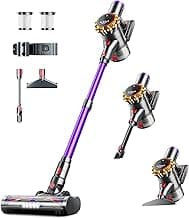
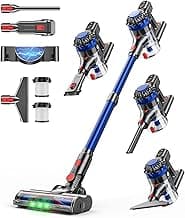

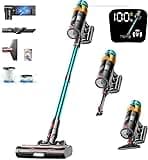
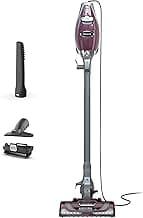
Why Long Hair Defeats Standard Vacuum Engineering
Traditional vacuum brush rolls feature bristles designed agitating carpet pile and lifting embedded debris. These bristles prove perfect for their intended purpose and absolutely terrible for long hair—the gaps between bristles become anchor points where hair wraps, tangles, and accumulates until the brush stops rotating entirely. What worked brilliantly on your previous home's carpet becomes liability when cohabitating with anyone whose hair reaches past shoulders.
The physics of wrapping explains the problem: 18-inch hair strand encounters rotating 6-inch diameter brush, wraps around it three times per rotation, and tangles with previously-wrapped strands creating compound entanglement strengthening with each subsequent vacuum pass. Within five minutes of cleaning, the brush roll looks like it's growing hair itself—a disturbing mechanical creature requiring intervention before it evolves consciousness and begins demanding its own bathroom time.
Static electricity amplifies this challenge—freshly shed hair carries charge attracting it to vacuum components, carpet fibers, hard floor textures, and pretty much any surface exhibiting opposite charge. Dry winter heating intensifies this attraction, making hair cling with determination requiring mechanical force rather than gentle sweeping. The same physical principle making hair cling to clothes straight from dryer makes it resist vacuum collection despite appearing loose and easily removable.
For gift-givers watching friends or partners constantly complaining about hair everywhere despite frequent cleaning, understanding this isn't laziness or poor housekeeping—it's genuine engineering challenges standard vacuum designs never anticipated when optimizing for carpet debris and pet fur. The best vacuum cleaner for long hair requires specific modifications addressing human hair's unique combination of length, fineness, and static properties that make it behave differently from any debris vacuums traditionally targeted. When considering thoughtful gifts for women with long hair or practical presents for men living with long-haired partners, equipment addressing this specific daily frustration demonstrates perceptive understanding.
Who Actually Faces This Challenge
Households with multiple long-haired residents: Homes where two or more people maintain long hair—college roommates, multigenerational families, communal living situations. Each person sheds individually manageable amounts that compound into overwhelming accumulation requiring daily attention preventing visible buildup. For friends in these situations constantly joking about "finding hair in everything," practical solutions addressing their specific reality prove more valuable than sympathetic laughter alone.
Partners of long-haired individuals: Someone without long hair themselves managing home cleaning for household including long-haired partner, roommate, or family member. They face the disconnect between not personally generating problem but being responsible addressing it—creating understandable frustration when standard equipment proves inadequate for challenge they didn't create. For spouses or partners, equipment enabling them managing this without resentment demonstrates support for shared household responsibilities.
Parents of teenage daughters navigating hair experimentation: Families where multiple teenagers simultaneously discovering hair styling, extension enthusiasm, or simply growing out childhood cuts into adolescent lengths. The compound effect of multiple young people simultaneously shedding while learning grooming creates hair accumulation demanding industrial-strength solutions residential equipment wasn't designed handling. For parents already overwhelmed by teenage household chaos, tools simplifying this specific aspect demonstrate targeted practical support.
Professional hair stylists managing home workspaces: Those cutting, coloring, or styling hair at home—whether running businesses from residential spaces or simply friends constantly volunteering their services for acquaintances. These situations generate commercial-level hair volume in residential settings, demanding equipment bridging professional capability with home-appropriate form factors and storage. For entrepreneurial friends building beauty careers, proper equipment enables business viability their residential space would otherwise constrain.
The Anti-Tangle Brush Roll Revolution
Tangle-free brush roll designs represent most significant vacuum innovation for long hair households—using rubber fins or V-shaped bristle patterns that prevent hair wrapping rather than just making wrapped hair easier removing. These designs acknowledge that traditional bristle brushes fundamentally incompatible with long hair physics, requiring completely different mechanical approach rather than incremental improvements to existing designs.
Rubber fin designs feature solid fins extending from roller core without gaps where hair could wrap. Hair contacts rubber briefly then gets directed into suction path rather than tangling around rotating mechanism. This eliminates the "stopped vacuuming to pick hair out of brush" interruption that makes long-hair household cleaning feel Sisyphean—constantly stopping to maintain equipment rather than actually cleaning spaces.
V-shaped bristle patterns angle fibers preventing straight-on hair contact that leads to wrapping. Hair slides along angled bristles rather than wedging between them, reducing accumulation dramatically versus traditional straight bristle designs. While some hair still accumulates (physics prevents perfection), the quantity requiring removal drops from "every use" to "weekly" or even "monthly"—transforming maintenance burden into manageable routine rather than constant interruption.
However, anti-tangle designs often sacrifice some carpet deep-cleaning capability—the very features preventing hair tangle also reduce aggressive agitation extracting embedded carpet debris. For homes with primarily hard floors or low-pile carpet, this trade-off proves entirely acceptable. For thick-pile carpet households, the compromise requires evaluation whether superior hair management justifies adequate-rather-than-excellent carpet performance. The best vacuums for long hair acknowledge this engineering tension rather than claiming perfect performance across all applications ignoring physics constraints.
Suction-Only Approaches: When Simplicity Wins
Some vacuums eliminate brush rolls entirely—relying exclusively on powerful suction capturing debris without any rotating mechanisms. This approach prevents hair tangling completely through removing components where tangling occurs. The radical simplicity appeals: no brushes means no hair-wrapped brushes, no maintenance, no cleaning interruptions.
However, suction-only designs demand significantly more motor power achieving equivalent cleaning versus brush-assisted collection—particularly on carpet where embedded debris requires mechanical agitation beyond what suction alone provides. Battery-powered cordless suction-only designs face particularly steep challenges delivering adequate carpet performance within reasonable weight and runtime constraints. These work brilliantly on hard floors and acceptable on low-pile carpet but struggle with medium-to-high pile carpet requiring aggressive extraction.
For predominantly hard-floor homes with long-haired residents, suction-only designs prove ideal—maximum hair pickup without any maintenance burden. For carpet-dominant homes, the performance compromise might prove unacceptable despite maintenance benefits. Understanding recipient's actual flooring distribution informs whether suction-only approaches serve their complete needs or just address hard floor areas while leaving carpet inadequately cleaned. For comprehensive flooring solutions, explore multi-surface vacuum options balancing varied surface needs.
The Hair Salon Professional Application
The best vacuum for hair salon faces challenges residential equipment never encounters—continuous hair generation throughout operating hours, diverse hair types from multiple clients, combination of cut hair pieces plus naturally-shed strands creating volume overwhelming residential capacity. Commercial-grade capability proves mandatory rather than optional when business operations depend on maintaining sanitary presentable environment despite constant heavy contamination.
Salon vacuums require larger dust capacity—residential 1-2 quart bins necessitating multiple daily emptyings prove impractical during busy appointment schedules. Commercial 1-2 gallon capacities enable full-day operation without interruption, critical when stylists work back-to-back appointments generating continuous debris requiring immediate removal maintaining professional appearance and hygiene standards.
Continuous-duty motors withstand sustained operation residential motors can't tolerate—shop vacuums running hours daily without thermal shutdown that destroys residential equipment within weeks under commercial workload. This duty cycle engineering separates professional-appropriate equipment from residential vacuums pressed into commercial service failing prematurely creating business disruption when equipment becomes unreliable during critical operating hours.
However, commercial shop vacuums often prove too bulky and loud for salon environments prioritizing aesthetic ambiance and client comfort. Specialized salon vacuums bridge this gap—commercial duty cycles and capacity in designs considering noise levels, appearance, and maneuverability around styling stations. For friends building salon businesses or managing existing shops, equipment meeting both functional and experiential requirements demonstrates understanding beauty industry demands beyond just "it picks up hair."
Different Hair Types, Different Challenges
Straight fine hair—common in Asian and some European populations—sheds individual strands that cling through static and slide into narrow gaps standard vacuums miss. The fine diameter lets hair working into textured surfaces and around small obstacles, proving harder to capture than thicker hair types despite potentially less overall volume. These hairs require strong suction and edge cleaning capability reaching crevices where fine strands accumulate.
Curly coarse hair—common in African and some Mediterranean populations—sheds less frequently but in larger clumps that can jam vacuum intakes if not properly engineered. The texture creates more friction against surfaces, actually making initial pickup easier but requiring larger intake openings preventing clogs. These differences mean "works for long hair" doesn't universally translate across hair types without understanding specific texture considerations.
Color-treated hair sheds more than virgin hair—chemical processing weakening shaft structure increasing breakage and shedding rates. Homes where residents frequently color treat hair face elevated cleaning challenges beyond what natural hair volume would suggest. This consideration matters when selecting equipment capacity—someone's hair length visible, but treatment history affecting actual shedding volume isn't apparent without asking invasively-personal questions gift-givers shouldn't necessarily pursue.
Hair extensions—temporary or semi-permanent—create unique challenges combining natural shedding from scalp with extension fiber release from attachment breakdown. These situations generate mixed debris types in single household, potentially requiring equipment handling both human hair and synthetic fibers with different physical properties. For recipients known experimenting with extensions, equipment versatility matters beyond just natural hair considerations.
Where Hair Actually Accumulates
Bathrooms prove ground zero for long hair—shower drains collect obviously, but baseboards around toilets and sink areas accumulate insidiously through daily grooming activities. Standard vacuum cleaning heads struggle accessing tight bathroom spaces around plumbing fixtures where hair gathers most densely. Specialized crevice tools and flexible hose attachments prove essential rather than optional for thorough bathroom cleaning where hair concentration maxes out.
Bedrooms where hair drying occurs develop concentrated accumulation zones—wherever someone stands during blow-dry styling, hair collects on floors within 3-4 foot radius. This concentrated deposition differs from distributed shedding throughout home, creating specific high-intensity zones requiring more frequent attention than general home maintenance. Understanding this pattern helps recipients prioritizing their cleaning attention matching actual contamination distribution rather than equal attention everywhere.
Laundry rooms collect hair from clothing and bedding—transfer from where hair originally sheds to where fabrics get washed releasing collected strands. This secondary accumulation point means thorough home hair management requires addressing not just visible shedding sites but also transfer locations where hair appears despite nobody directly shedding there. Comprehensive cleaning acknowledges hair's journey through household rather than just addressing origin points.
Upholstery and carpet serve as temporary hair storage—strands shed onto furniture or floors working into fabric weave where they remain until aggressive extraction removes them. This hidden accumulation explains why homes feel cleaner immediately after vacuuming but hair becomes visible again quickly—the cleaning extracted surface hair without reaching fabric-embedded reserves that migrate to surface over subsequent hours and days. True cleanliness requires extraction capability beyond just visible surface collection.
The Edge Cleaning Imperative
Long hair doesn't stay in room centers—static attraction and air currents drive it toward edges where walls meet floors, creating concentrated accumulation in baseboards and corners. Standard vacuum cleaning heads missing edges by inches leave perpetual hair borders making entire cleaning effort feel inadequate despite thorough center coverage. Edge cleaning capability transforms results from "clean except the edges" to genuinely clean appearance matching effort invested.
Side suction channels integrated into cleaning head width enable edge cleaning during normal passes rather than requiring separate crevice tool passes doubling cleaning time. This integration determines whether edge cleaning actually happens versus getting perpetually deferred because separate-tool requirement feels burdensome during routine maintenance. Equipment making thorough cleaning easy gets used thoroughly; equipment making thorough cleaning complicated gets used partially with corners constantly neglected.
Articulated nozzles reaching baseboards and furniture edges address the tight-space challenge long hair creates. Rigid rectangular cleaning heads can't access corners where walls meet or around furniture legs where hair concentrates. Flexible access during normal cleaning passes prevents these areas becoming permanently-dirty zones users learn ignoring because addressing them properly requires moving furniture regularly—a standard nobody maintains long-term regardless of good intentions.
The best vacuum doesn't make hair stop shedding—it makes managing the inevitable feel achievable rather than fighting losing battle against biology.
Cordless Convenience for Responsive Cleaning
Long-haired households benefit enormously from grab-and-go cordless convenience—seeing hair accumulation and addressing it immediately rather than waiting for scheduled cleaning sessions. The 30-second hair cleanup between deeper cleaning sessions maintains appearance preventing visible buildup creating "this place is disgusting" impressions guests or household members might form between thorough maintenance.
However, long hair accumulation requires frequent cleaning generating sustained battery demands cordless designs struggle meeting over time. Daily quick cleanups compound into runtime requirements exceeding what single-charge coverage provides for larger homes. Battery degradation over 18-24 months further reduces initially-adequate runtime, creating frustration when equipment that initially served complete home eventually requires mid-clean recharging for same space.
For long-hair households specifically, this runtime concern matters more than typical residences—the cleaning frequency required managing visible hair exhausts batteries faster than weekly cleaning schedules typical homes maintain. Assessing recipient's actual home size against realistic (not advertised) cordless runtime prevents gifting equipment inadequate for their space despite theoretically sufficient specifications under best-case testing conditions manufacturers cite. For cordless options, consider surface-specific cordless designs when particular flooring types dominate.
The Filtration-Hygiene Connection
Human hair carries skin cells, oils, product residue, and environmental particles—making it more than just cosmetic nuisance but actual hygiene concern when accumulating. Quality filtration capturing particulates hair carries prevents redistributing these contaminants into air during cleaning, maintaining sanitary home environment beyond just visual cleanliness floors achieve.
However, excessive filtration sometimes proves counterproductive for hair-heavy applications—ultra-fine HEPA filters potentially clog faster from oil and product residue hair carries versus pet hair's primarily dry contamination. Multi-stage filtration with pre-filters capturing larger particles before HEPA stage extends filter life and maintains suction longer between cleaning cycles. This staged approach proves particularly valuable for long-hair households generating consistent contamination requiring sustained performance rather than peak capability followed by rapid degradation.
Washable filters serve long-hair households well—frequent cleaning requirement from hair accumulation makes disposable filter costs add up significantly. Washable designs accepting regular maintenance without ongoing consumable expenses align with the frequent-service nature long-hair management demands. For environmentally-conscious recipients or budget-aware households, this operational cost consideration matters beyond just initial purchase price. For comprehensive filtration options, explore advanced HEPA systems when respiratory concerns coexist with hair management needs.
When to Gift: Timing That Demonstrates Understanding
Moving in together: Couples cohabiting for first time often discover one partner's long hair creates cleaning challenges the other never anticipated. Equipment gift during this adjustment period provides practical support navigating domestic adaptation rather than just celebrating relationship milestone. This timing makes practical tool feel like partnership support rather than random household item.
After hearing repeated complaints: When friends or family constantly mention struggling with hair everywhere despite frequent cleaning. Recognition of their articulated frustration shows you've listened rather than just nodding sympathetically. Equipment directly addressing their specific complaint demonstrates problem-solving support rather than just emotional validation leaving problem unsolved.
Salon opening or home business launch: Professional equipment enabling business operations proves more valuable than celebratory gestures when someone starts beauty career. The practical capability supporting their entrepreneurial success demonstrates investment in their achievement beyond just congratulations. This timing transforms equipment into career infrastructure rather than just cleaning tool.
Roommate or household transition: When someone moves into shared housing discovering long-haired roommates creating unexpected cleaning burden. Equipment enabling them managing situation without resentment toward housemates supports positive relationship development. For young adults navigating first communal living experiences, tools enabling successful cohabitation prove genuinely valuable. Consider how practical gifts for young men or women entering shared living situations support their independence.
Budget Considerations Across Use Intensity
Light residential use (1-2 long-haired residents, primarily hard floors) enables success with mid-range residential equipment ($150-250)—adequate anti-tangle features and reasonable maintenance requirements without needing commercial-grade capability. These households generate manageable hair volume standard residential equipment modified for hair challenges handles adequately.
Heavy residential use (3+ long-haired residents, mixed flooring) requires premium residential or light commercial equipment ($250-400)—superior anti-tangle engineering, larger capacity, and enhanced durability withstanding intensive cleaning frequency heavy hair households demand. The best vacuum for long human hair in these situations prioritizes sustained performance over initial impressions, requiring investment in capability matching actual use intensity.
Professional salon use demands commercial equipment ($400-800+)—duty cycles, capacity, and durability residential equipment can't provide regardless of quality. Professional-grade motors, commercial filtration, and service-friendly designs prove mandatory when business operations depend on reliable equipment performance throughout operating hours. For salon owners, this represents business infrastructure investment rather than household convenience purchase, changing justification calculations entirely.
Maintenance Reality: The Ongoing Attention Required
Even anti-tangle brushes require periodic hair removal—physics prevents completely maintenance-free operation when confronting long human hair's exceptional wrapping capability. Quality designs reduce this from "every use" to "weekly" or "monthly," but elimination proves impossible. Setting realistic expectations prevents concluding equipment failed when it simply requires normal maintenance inherent to application regardless of design quality.
Tools for hair removal—scissors, seam rippers, or specialized cleaning tools—should accompany equipment gift. Simple blade running along brush roll length slicing wrapped hair enables quick maintenance without disassembly frustration. Including these tools shows you understand complete ownership experience requiring occasional attention rather than just magical maintenance-free operation marketing implies possible but engineering can't deliver.
Filter cleaning frequency increases with hair volume—oils and product residue hair carries accelerates filter contamination versus dry debris. Monthly filter attention rather than quarterly maintains performance for hair-heavy applications. Communicating this requirement prevents recipients concluding vacuum lost suction through defect when really it needs routine filter cleaning their previous vacuum required less frequently creating different maintenance expectations.
Reading Reviews for Long-Hair Specific Insights
Filter reviews from households specifically mentioning long human hair rather than pet fur or general cleaning. Hair and fur behave differently—reviews addressing actual challenge recipient faces provide relevant performance data versus adjacent-but-different scenarios marketing conflates through vague "great for hair" claims not distinguishing sources or characteristics.
Maintenance frequency complaints reveal whether anti-tangle claims deliver practically. Reviews mentioning "still need to cut hair off brush every use" despite manufacturer anti-tangle marketing indicate performance gap between advertising and reality. Conversely, reviews praising "rarely need to clean brush" validate engineering actually solving problem rather than just making marginal improvements over traditional designs.
Long-term reviews (6+ months) discussing sustained brush performance reveal whether anti-tangle designs maintain capability or degrade into traditional tangling as materials wear. Initial performance sometimes proves unsustainable when rubber fins harden, bristle patterns flatten, or mechanisms develop play allowing hair access to previously-protected areas. Pattern recognition across reviews revealing consistent degradation timeline helps predict when equipment might require replacement or service rather than assuming indefinite maintenance of initial capability.
When Equipment Alone Proves Insufficient
Some long-hair households face accumulation rates exceeding what any residential vacuum manages sustainably—multiple residents with very long hair generating commercial-level volume in residential spaces. Professional cleaning services providing periodic deep extraction might prove more practical supplementing owner efforts rather than expecting residential equipment handling extraordinary volume indefinitely without professional intervention.
Drain cleaning tools and shower filters addressing bathroom hair accumulation complement floor vacuum capability—managing hair at shedding point prevents some proportion entering floor cleaning workflow. For gift contexts, acknowledging equipment addresses floor cleaning specifically while bathroom requires different tools demonstrates comprehensive understanding rather than implying single vacuum solves every hair challenge household faces.
Lifestyle adjustments affecting shedding volume—protective hairstyles reducing daily manipulation, microfiber towels reducing friction breakage, or simply shorter cuts—sometimes prove more effective than equipment upgrades. However, these suggestions require extreme sensitivity—unsolicited advice about changing hair practically for cleaning convenience risks sounding like you prioritize your cleaning comfort over their appearance autonomy. Equipment gifts should stand alone without implied "or you could just cut your hair" alternatives that feel judgmental regardless of practical merit.
The Salon Equipment Professional Gap
Shop vacuums prove too loud and bulky for salon ambiance prioritizing client comfort. Residential vacuums lack capacity and duty cycles handling commercial hair volume. This gap creates frustration for salon owners seeking equipment meeting both functional and experiential requirements—powerful enough for business needs but refined enough for beauty industry aesthetic standards.
Specialized salon vacuums filling this gap prove surprisingly rare—most manufacturers targeting either residential or general commercial markets without addressing beauty industry's specific combination of commercial volume and premium ambiance requirements. For salon owner gift recipients, equipment research revealing rare appropriate options demonstrates commitment beyond just "I bought you a vacuum" generic gift-giving. This effort matters more than cost when finding truly suitable equipment proves challenging.
Portable styling-station-integrated vacuums enable cleaning during appointments without disrupting service flow—client's hair gets cut and immediately vacuumed preventing floor accumulation between appointments. This proactive approach maintains consistent cleanliness impossible with post-appointment-only cleaning creating visible mess accumulation during busy periods. For friends building salon businesses, understanding operational workflow rather than just "need vacuum for hair" enables recommending genuinely valuable solutions matching how they actually work.
The Relationship Dynamic of Shared-Space Hair
Long hair creates tension in shared living spaces—the person shedding often feels defensive about biological process they can't control while others feel frustrated managing mess they didn't create. Equipment enabling efficient cleaning reduces this tension through making management feel achievable rather than burdensome labor creating resentment. For gift contexts addressing this dynamic, framing around "making our shared space easier to maintain" proves more diplomatic than "dealing with your hair problem."
However, gifts from partners or roommates risk feeling like criticism disguised as helpfulness—"I got you something for your hair" potentially landing as "your hair bothers me enough I bought equipment addressing it." This sensitivity requires positioning gifts around shared benefit: "I found this vacuum that's supposed to work great on long hair—thought it might make cleaning easier for both of us" acknowledges mutual benefit rather than making shedding person feel singled out for creating problem requiring correction.
For parents addressing teenage daughters' hair, equipment gifts risk feeling like you're making them responsible for something they can't control. Framing as family resource—"got this for our bathrooms since we all seem to have hair everywhere"—distributes responsibility rather than targeting individual. This psychological positioning determines whether practical tool gets embraced versus creating defensive reactions about being blamed for normal biological process everyone experiences to varying degrees.
The goal isn't making someone feel bad about shedding—it's making living with biological reality manageable without requiring obsessive maintenance or accepting unacceptable mess levels.
Complete Management System Thinking
Vacuum represents one component within broader hair management approach—drain catchers preventing bathroom clogs, microfiber cloths capturing bathroom counter hair, strategic color choices (dark floors) showing hair less visibly. For comprehensive gift contexts, acknowledging vacuum addresses floor cleaning while other tools serve different aspects demonstrates understanding complete challenge rather than implying single solution solves everything.
However, avoid overwhelming recipients with unsolicited complete-system recommendations unless they've explicitly expressed interest. Equipment gift stands alone as practical support; additional suggestions should respond to articulated frustrations rather than presuming they need comprehensive lifestyle revision you're providing. This distinction between helpful and presumptuous determines whether multi-component suggestions feel supporting versus controlling about how they manage their home.
Long-Term Value: Sustained Performance Matters
Durability under intensive use determines whether equipment serves long-hair households for years versus disappointing within months as daily cleaning frequency exceeds manufacturers' average residential use assumptions. Long-hair homes vacuum more frequently than typical households—this intensive use stresses motors, bearings, and components beyond standard design parameters requiring considering commercial-grade durability even for residential applications.
Parts availability and repair accessibility matter when equipment inevitably needs service. Brush rolls wear faster from frequent cleaning and hair exposure. Filters clog quicker requiring replacement. Motors work harder maintaining suction against hair-challenged airflow. Equipment from manufacturers supporting long-term ownership through parts availability and repair options delivers better value than cheap disposability forcing complete replacement when maintainable components fail.
Warranty terms reflecting manufacturer confidence prove revealing about expected longevity—short warranties suggest anticipated premature failures. Quality vacuums appropriate for long-hair challenges offer 3-5 year warranties demonstrating manufacturer confidence in durability under demanding applications creating intensive use their equipment must withstand. This warranty length proves better predictor of real-world longevity than marketing claims every manufacturer makes regardless of actual engineering investment in durability.
Success Metrics: What Actually Matters
Success isn't dramatic gratitude during gift presentation—it's sustained equipment use months later, hearing complaints about hair ceased, or noticing their home maintains cleaner appearance despite same biological reality of shedding continuing unchanged. These delayed outcome validations prove gift served actual utility rather than just generating momentary appreciation.
Visible cleanliness improvements matter more than technical specifications. Does their home look cleaner? Do they seem less stressed about cleaning? Has "there's hair everywhere" stopped appearing in conversation? These practical outcomes demonstrate equipment solved real problem rather than just impressive specifications failing translating into lived experience improvement.
For relationships allowing ongoing equipment discussions: maintenance questions emerging signal active use requiring attention, not equipment failure. "How often should I clean the brush roll?" proves better success indicator than "thanks, works great" perfunctory politeness. Engagement with equipment maintenance demonstrates adoption into regular routine rather than sitting unused because it proved incompatible with actual workflow despite theoretical appropriateness.
Gifts are for making an impression, not just for the sake of it.
GiftsPick - Meticulous, Kind, Objective.