
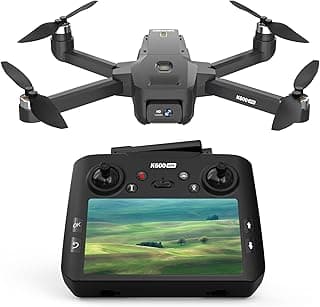
The Technical Pillars of Aerial Video Quality
To identify a truly high-performance machine, one must scrutinize the internal processing capabilities. Even the best 4k drone can produce "muddy" footage if the bitrate is too low. Bitrate, measured in Megabits per second (Mbps), determines how much data is recorded every second. For professional-grade results, look for units capable of at least 100-150 Mbps. This ensures that fast-moving subjects or complex textures like flowing water do not devolve into pixelated artifacts during playback.
Furthermore, color depth is a critical differentiator for those who understand what is someone that loves technology at a deep level. Standard drones record in 8-bit color, which offers roughly 16.7 million colors. While this sounds vast, it often leads to "banding" in gradients like sunsets. A gift-worthy professional drone should offer 10-bit D-Log or HDR recording. This provides over 1 billion colors, giving the editor the latitude to "color grade" the footage in post-production without the image breaking down.
Sensor and Optics Comparison for Gift Selection
The following table outlines the hardware specifications necessary to move from consumer-level toys to serious cinematography tools:
| Feature | Standard Consumer Grade | Professional Cinematography Grade |
|---|---|---|
| Sensor Size | 1/2.3-inch CMOS | 1-inch or Micro Four Thirds (MFT) |
| Color Depth | 8-bit (Standard) | 10-bit D-Log / ProRes 422 HQ |
| Max Bitrate | 60 - 100 Mbps | 150 - 1000+ Mbps |
| Gimbal Precision | +/- 0.03° | +/- 0.01° (Ultra-Stable) |
Empathy in Design: Matching the Drone to the User
A gift is only successful if the recipient can actually operate and maintain it. For a traveler who prioritizes portability, the best video quality drone might be a high-end sub-250g model. These units often bypass the need for complex FAA registration in many regions, making them a stress-free best birthday gift ideas choice. However, these smaller units often sacrifice wind resistance. If the recipient lives in a coastal or mountainous area, a heavier, more robust best quadcopter-drone is required to keep the camera steady against gusts that would cause smaller blades to struggle.
For those struggling with how to come up with good gift ideas for an older recipient or someone with limited technical patience, autonomous flight modes are a must. Features like "MasterShots" or "ActiveTrack" use AI to execute complex cinematic maneuvers—like a "Circle" or "Boomerang"—at the touch of a button. This allows the user to focus on the creative vision rather than the mechanical stress of piloting.
The Buy It For Life (BIFL) Philosophy and Hidden Costs
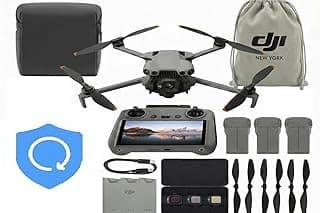
Engineering-wise, drones are high-wear devices. When gifting a best professional drone, one must consider the long-term cost of ownership. Lithium Polymer (LiPo) batteries are consumables; they typically begin to lose significant capacity after 200-300 charge cycles. A responsible gift should include a "Fly More" combo, providing extra batteries to extend the useful life of the kit.
Furthermore, avoid drones with completely proprietary, non-replaceable parts. A minor "fender bender" with a tree shouldn't mean the end of the device. Look for brands that have robust third-party ecosystems for replacement propellers, ND filters, and landing gear. Modular designs where the gimbal or camera can be serviced independently of the main airframe are the hallmark of a product meant to last years rather than months.
Optimizing the Visual Output: The Role of ND Filters
To achieve the "cinematic look" (the 180-degree shutter rule), drones require Neutral Density (ND) filters. Without these, the drone’s camera must use a very high shutter speed to compensate for bright sunlight, resulting in "choppy" video. Including a set of high-quality ND filters—essentially sunglasses for the camera—is what separates a thoughtful gift from a generic purchase. It shows a deep understanding of the craft of cinematography.
Frequently Asked Questions
Is 8K resolution necessary for a video quality drone?
No; for the vast majority of users, high-quality 4K with a large sensor and high bitrate will look significantly better than 8K captured on a small, noisy sensor. 8K is primarily useful for professional cropping and downsampling, but it increases storage demands and processing heat exponentially.
Do I need to buy extra insurance for a high-end drone gift?
Yes; given the mechanical complexity and flight risks, purchasing a manufacturer’s protection plan (like DJI Care Refresh) is highly recommended. It allows for low-cost replacements in the event of a crash, ensuring the recipient isn't left with a broken "paperweight" after their first mistake.
Can these drones be repaired at home?
Partially; propellers and landing gear are usually user-replaceable. However, internal sensor calibration and ESC (Electronic Speed Controller) repairs often require specialized software and clean-room environments. Choosing a brand with local service centers is a critical BIFL consideration.
What is the most important accessory for a video drone?
A set of ND filters is the most important tool for video quality. After that, a high-speed V30 or V60 rated microSD card is essential; standard cards often fail to write data fast enough, causing the drone to drop frames or stop recording entirely.
How much wind can the best video quality drones handle?
Most professional consumer drones are rated for Level 5 winds (up to 19-24 mph). While the drone can stay airborne in higher winds, the video quality will degrade as the gimbal hits its mechanical limits trying to compensate for the tilt of the aircraft.