
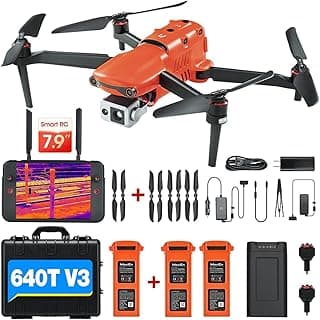
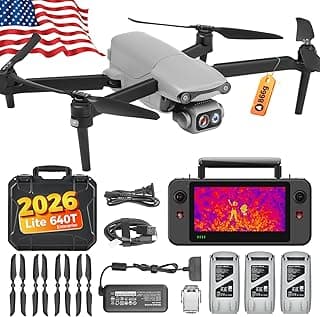
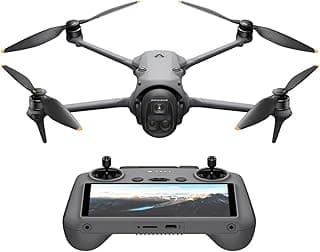
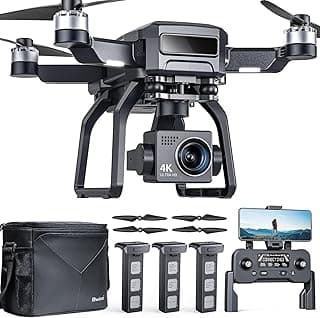
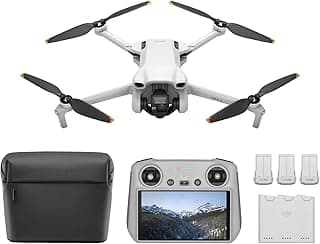
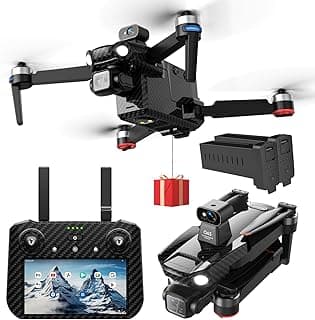
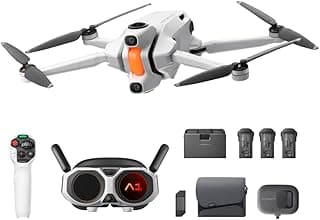
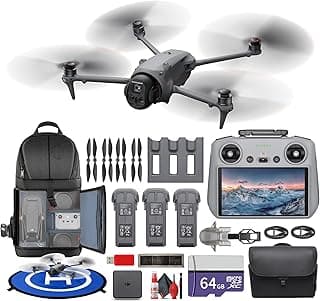
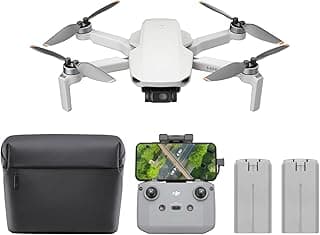
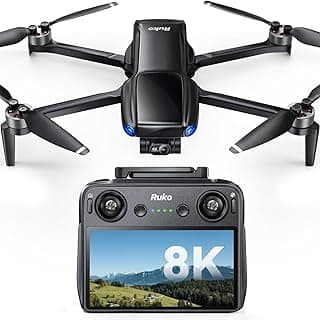
From a mechanical engineering perspective, the distinction lies in system redundancy and sensor integration. While consumer models focus on aesthetics and ease of flight, a commercial-grade system prioritizes data integrity and flight stability under adverse conditions. When considering what do engineers like for gifts, the answer often lies in the precision of the hardware. A truly professional system utilizes high-torque brushless motors and sophisticated flight controllers that can maintain GPS-locked positioning even in high-interference environments or significant wind resistance.
Gifting tech is about more than specifications; it is about upgrading the recipient's window to the digital world, ensuring every frame is a testament to quality.
The "Buy It For Life" (BIFL) philosophy is particularly relevant in the UAV industry. Most consumer drones feature permanently welded plastic shells and proprietary batteries that become obsolete within two cycles of hardware refreshes. In contrast, the best commercial drone options often feature modular payloads. This allows the user to swap out an RGB camera for a thermal sensor or a LiDAR unit without replacing the entire airframe. This modularity is a critical factor for what is someone that loves technology, as it ensures the hardware can evolve alongside emerging sensor technologies.
| Technical Variable | Consumer-Grade Standards | Commercial-Grade Requirements |
|---|---|---|
| Positioning Accuracy | Standard GPS (1-3 meters error) | RTK/PPK Integrated (Centimeter-level precision) |
| Motor Efficiency | High-speed brushed/entry brushless | Industrial-grade brushless with active cooling |
| Data Security | Cloud-sync by default (Potential leaks) | AES-256 encryption & offline local data modes |
| Ingress Protection | No official IP rating (Dry weather only) | IP43 to IP55 (Dust and splash resistance) |
When analyzing the best commercial drone for a specific professional, one must apply multi-dimensional user empathy. A surveyor requires a best professional drone equipped with Real-Time Kinematic (RTK) modules to ensure that topographical maps are accurate to within centimeters. Conversely, a public safety official or private investigator may prioritize best surveillance drones that offer high-altitude zoom capabilities and silent propeller configurations to maintain a low acoustic profile. For these users, the value of the gift lies in its ability to solve complex operational problems.
However, an expert analysis must also address the "hidden costs" of professional UAV ownership. Unlike a standard gift, a best uav drone requires a long-term maintenance strategy. Lithium-polymer (LiPo) and Lithium-high-voltage (LiHV) batteries have a finite lifecycle, typically degrading significantly after 200 to 300 charge cycles. Prospective buyers should account for the recurring cost of flight batteries and the necessity of specialized storage cases to prevent fire hazards. Furthermore, the availability of third-party replacement parts, such as carbon fiber propellers and gimbal vibration dampeners, is a hallmark of a high-quality ecosystem that avoids the traps of fast-consumerism.
For a professional woman entering the fields of environmental science or infrastructure photography, finding the best gift ideas for a woman often involves looking toward high-end imaging platforms. These drones feature 1-inch or larger CMOS sensors that provide the dynamic range necessary for professional color grading and photogrammetry. The shift toward enterprise-grade optics ensures that the "gift" is actually a scalable business asset rather than a fleeting entertainment device.
It is important to maintain a level of commercial skepticism regarding manufacturer-claimed flight times. When a brand advertises "45 minutes of flight," this is typically calculated in a controlled laboratory setting with zero payload and zero wind. In real-world commercial applications, where the drone might carry an external sensor and face a 15-knot breeze, the operational flight time is often 25% to 30% lower. Expert gifting involves selecting a platform with sufficient power overhead to handle these real-world stresses without compromising safety or data quality.
Gifting tech is about more than specifications; it is about upgrading the recipient's window to the digital world, ensuring every frame is a testament to quality.
In terms of user empathy for the elderly or those with physical limitations, the weight and ergonomics of the remote controller (GCS - Ground Control Station) are paramount. Many commercial systems now offer high-brightness integrated displays, eliminating the need for fumbling with mobile phones and cables. This streamlined interface reduces cognitive load and physical strain during long surveying missions, making the technology accessible to professionals across all age demographics.
Frequently Asked Questions
Do commercial drones require special licensing compared to consumer models?
Yes. In most jurisdictions, operating any drone for commercial purposes—including those classified as the best commercial drone—requires a specific remote pilot certification (such as the FAA Part 107 in the United States). This ensures the operator understands airspace regulations and emergency procedures.
Is the extra cost for a thermal camera worth it for a gift?
Only if the recipient works in specific sectors like HVAC, search and rescue, or electrical inspection. Thermal sensors are specialized tools that measure heat signatures; for a standard photographer or surveyor, a high-resolution RGB sensor is a more cost-effective and practical choice.
Can commercial drones be repaired by the user?
Partially. While high-end platforms are more modular, allowing for propeller and gimbal replacements, the internal flight controllers and ESCs (Electronic Speed Controllers) are often proprietary. It is vital to choose brands that have established service centers and available repair manuals to ensure the longevity of the investment.
What is the primary difference between a UAV and a standard drone?
Technically, they are the same, but the term UAV (Unmanned Aerial Vehicle) is usually reserved for professional or military contexts. A best commercial drone is referred to as a UAV to emphasize its role as a component of a larger "system" (UAS), which includes the aircraft, the controller, and the data link.
In summary, the best commercial drone is a synthesis of aeronautical physics and professional-grade sensors. Whether you are navigating best gift ideas for him or selecting a tool for an engineer, prioritizing modularity, data security, and physical durability will ensure the gift remains a valuable asset for years to come. By moving away from flimsier consumer models and investing in an enterprise ecosystem, you are providing a tool that fosters professional growth and technological mastery.