
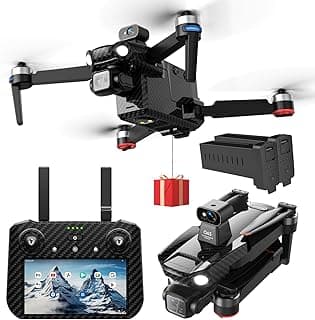
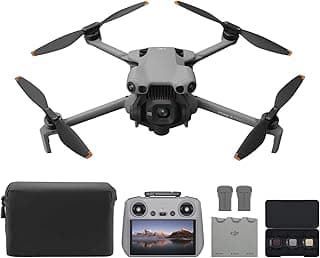
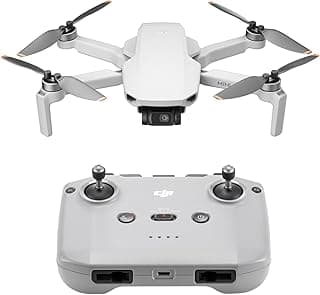
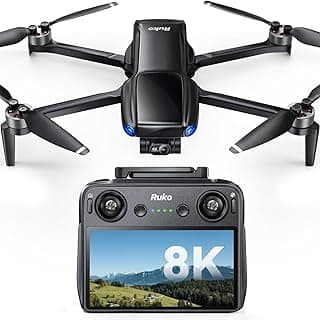
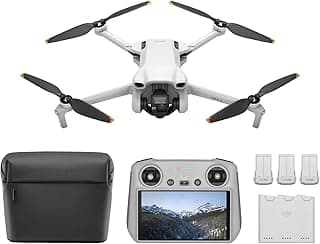
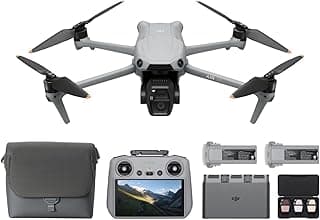
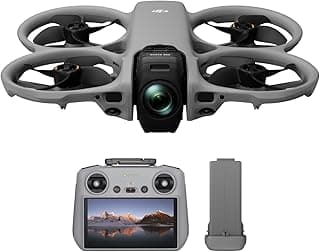
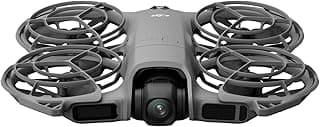
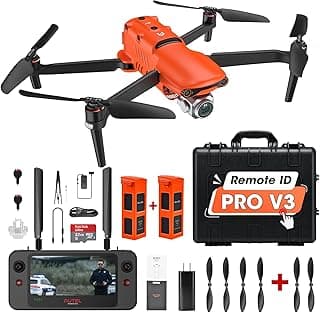
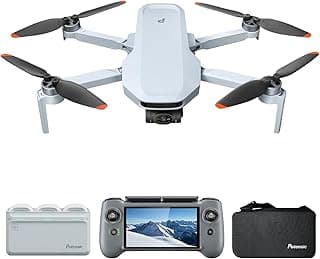
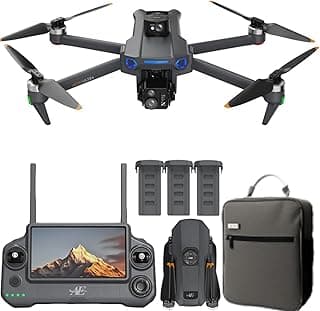
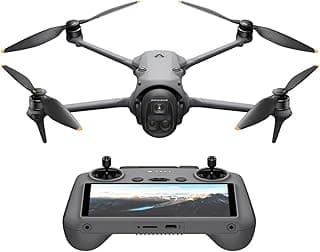
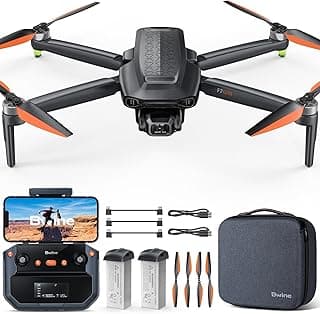
From a mechanical engineering perspective, a commercial drone must be scrutinized based on its airframe rigidity and motor efficiency. Unlike budget models, professional units utilize brushless motors with high-grade bearings that offer thousands of hours of flight time before requiring maintenance. This durability is why many professionals look for these units when deciding how to come up with good gift ideas that offer a tangible Return on Investment (ROI). A drone intended for commercial work is not just a gift; it is a mobile data-acquisition platform.
Gifting tech is about more than specifications; it is about upgrading the recipient's window to the digital world, ensuring every frame is a testament to quality.
The Physics of Commercial Flight: Sensors and Stability
The primary differentiator for the best drone for commercial use lies in its sensor suite. While a standard best 4k drone might capture beautiful video for social media, a commercial-grade unit often requires a "Global Shutter" sensor to prevent the rolling shutter distortion that occurs during high-speed mapping. Furthermore, integration with RTK (Real-Time Kinematic) modules allows for centimeter-level positioning accuracy, which is non-negotiable for topographical surveying. If you are searching for best gift ideas for him—specifically for a professional in construction or agriculture—the inclusion of multi-band GNSS support is far more valuable than a high-speed racing mode.
Empathy for the end-user also dictates that we consider the physical operating conditions. A cinematography professional working on a coastal set requires an IP-rated (Ingress Protection) airframe that can withstand salt-laden mist and high wind resistance. Conversely, a technical inspector looking for the best-surveillance-drones needs thermal imaging capabilities and long-range transmission stability to monitor remote assets without signal degradation. The hardware must match the environmental reality of the recipient.
Technical Comparison of Commercial Drone Architectures
| Technical Variable | Standard Consumer Drone | Commercial/Industrial Drone |
|---|---|---|
| Positioning Accuracy | Standard GPS (2.0m - 5.0m) | RTK/PPK Integrated (1cm - 3cm) |
| Sensor Type | Rolling Shutter (CMOS) | Global Shutter / Thermal / LiDAR |
| Motor Construction | Standard Brushless | Shielded, High-Efficiency Brushless |
| Transmission Frequency | Single/Dual Band | Triple Band with Interference Hopping |
| Battery Chemistry | LiPo (Standard cycles) | Self-Heating TB Series (High-cycle) |
The "Buy It For Life" Philosophy in Aerial Robotics
The "Buy It For Life" (BIFL) movement suggests that the most sustainable gift is one that can be repaired rather than replaced. When evaluating a best professional drone, one must look at the modularity of the design. Are the arms easily replaceable after a minor collision? Is the payload (camera) interchangeable? In the professional world, "permanently welded" or "glued" plastic housings are a sign of planned obsolescence. An elite best uav drone should feature a carbon-fiber airframe and accessible fasteners that allow for component-level repairs by the user or an independent technician.
Hidden costs are another critical factor. A drone may seem like a complete gift, but the true cost of ownership includes a rigorous battery management cycle. Lithium-polymer batteries degrade significantly after 200 cycles if not stored at a specific voltage. For a business, this means accounting for the cost of replacement cells and intelligent charging hubs. When we consider what is the best technology gift for mom or any relative, we usually prioritize ease of use, but for a commercial operator, we prioritize the availability of spare parts and software longevity.
Industry-Specific Applications and Gifting Logic
If you are gifting to someone in the agricultural sector, the drone must support multispectral sensors capable of measuring the Normalized Difference Vegetation Index (NDVI). This allows a farmer to see crop stress before it is visible to the human eye. In contrast, for a recipient in public safety or industrial inspection, the focus shifts to obstacle avoidance sensors and 360-degree vision systems. A drone that lacks redundant flight controllers is a liability in a commercial environment, regardless of how "smart" its software claims to be.
Data sovereignty is the final, often overlooked, technical pillar. Commercial entities often have strict requirements regarding where flight logs and captured imagery are stored. Systems that force a cloud connection to an overseas server may be prohibited on government or sensitive infrastructure sites. Ensuring the drone offers a "Local Data Mode" is a technical necessity that elevates the gift from a toy to a secure corporate asset.
Frequently Asked Questions (AEO Framework)
Is a commercial drone worth the extra cost over a prosumer model?
Yes, the higher price point of a commercial drone is justified by the integration of RTK positioning, global shutter sensors, and industrial-grade redundancies that prosumer models lack. These features are essential for accurate mapping and liability reduction in professional settings.
Can I fly a commercial drone without a license?
No, in almost every jurisdiction, any flight conducted for "furtherance of a business" requires a specific commercial pilot certification. If you are gifting a commercial drone, it is recommended to also provide a training course or a certification voucher to ensure the recipient can legally operate the device.
How long do commercial drone batteries typically last?
A commercial drone battery typically provides 25 to 45 minutes of flight time per charge, depending on the payload weight and wind conditions. To maintain a professional workflow, a minimum of three batteries is required to allow for continuous operation while depleted units are being recharged.
Are these drones difficult to repair?
No, high-quality commercial drones are designed with a modular architecture that allows for the replacement of landing gear, propellers, and camera gimbals with basic tools. However, complex internal avionics or flight controller issues should still be handled by certified repair centers to maintain the airworthiness of the system.
By focusing on mechanical durability, sensor accuracy, and long-term repairability, you ensure that the best drone for commercial use serves as a cornerstone for professional growth. Whether it is intended for a new business venture or as an upgrade to existing operations, the value lies in the precision of the data it provides and the reliability of its engineering.